


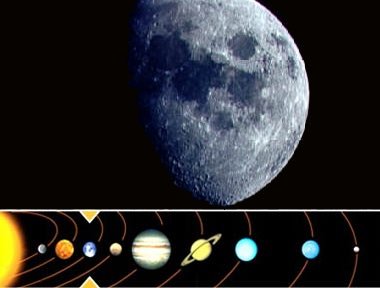
The Moon changes constantly. It moves through every sign of the zodiac approximately every 27.3 days, changes phase every few days, and influences the daily rhythm used by astrologers around the world. Our Lunar Moon Phase Ephemeris brings all of this information together on a single page, making it easy to see where the Moon is on any day between 1900 and 2125.
Whether you are learning astrology, researching historical events, planning ahead, or developing astrology software, this tool provides clear astronomical data in an easy to read format.
What Is a Moon Ephemeris?
An ephemeris is a table showing the calculated positions of astronomical bodies over time. In astrology, ephemerides are used to determine where the planets and Moon were, or will be, on any particular date.
Unlike a traditional printed ephemeris, the online Moon Phase Ephemeris allows you to select any date and instantly view the Moon's position together with important supporting information.
What Information Does the Page Show?
For every selected date, the page displays the Moon's zodiac sign, exact zodiac degree, ecliptic longitude, current lunar phase, Moon age, percentage illuminated, six hour Moon positions, and lunar eclipse information when applicable.
This provides both a quick overview and enough detail for more advanced astrological work.
Moon Sign and Zodiac Position
The Moon spends around two and a half days in each zodiac sign before moving into the next one. You can learn more about the Moon's astrological meaning on our Moon in astrology page.
For example, the ephemeris may show:
Moon in Cancer 00°
or:
Moon in Libra 17°
This tells you exactly where the Moon is located within the zodiac at 00:00 UTC on the selected date.
If the Moon enters a new sign during the day, the six hour table includes a simple ingress marker to highlight the change.
Understanding the Moon Phase
The page also identifies the current phase of the lunar cycle. These phases include the New Moon, Waxing Crescent, First Quarter, Waxing Gibbous, Full Moon, Waning Gibbous, Last Quarter, and Waning Crescent.
You can read more about the full lunar cycle in The Moon Moves Through Eight Phases Each Month.
The phase is displayed alongside the Moon's zodiac position, giving an immediate understanding of where the Moon sits within its monthly cycle.
Moon Age and Illumination
Each page includes the Moon's age and the percentage illuminated.
For example:
Waning Crescent Moon in Cancer 00° ? - 28 days old - 7% lit.
The Moon age tells you how many days have passed since the most recent New Moon, while the illumination percentage shows how much of the Moon's visible disc is lit by the Sun.
These values provide an intuitive way of understanding the lunar cycle at a glance.
Six Hour Moon Positions
The Moon moves quickly through the zodiac, travelling approximately thirteen degrees every day.
To show this movement, the page includes positions at 00:00 UTC, 06:00 UTC, 12:00 UTC, and 18:00 UTC.
This allows astrologers to estimate the Moon's movement throughout the day without consulting a full hourly ephemeris.
When the Moon enters a new zodiac sign, the table marks the first low degree position with an i to indicate the ingress.
Lunar Eclipses
Whenever a lunar eclipse occurs, the page automatically displays additional information beneath the selected date.
Depending on the event, this may include the eclipse type, maximum eclipse time, gamma value, umbra and penumbra measurements, and eclipse duration.
This makes it easy to identify important lunar events while browsing historical or future dates.
How Lunar Phases May Affect Daily Life
Astrologers often associate different lunar phases with changes in mood, energy, motivation, and focus.
For a broader explanation of these traditional interpretations, see How Lunar Phases Affect Mood, Energy and Focus.
The ephemeris provides the factual lunar position and phase information needed to place those interpretations into context.
A Tool for Astrologers and Developers
The Lunar Moon Phase Ephemeris is useful for many different purposes.
Astrologers can quickly check the Moon's position before writing horoscopes or interpreting birth charts. Students can follow the lunar cycle and observe how the Moon moves through the zodiac each month. Researchers can examine historical dates stretching back to 1900. Software developers can use the page as a reference when integrating astrology calculations into their own applications.
Built From NASA JPL Data
All planetary and lunar positions are calculated using data derived from NASA JPL Horizons, providing highly accurate astronomical positions suitable for both educational and astrological use.
The calculations use geocentric positions, the tropical zodiac, apparent positions, and airless coordinates.
This combination provides the standard reference used throughout the website.
Explore the Moon Through Time
Because the page covers more than 226 years of lunar motion, it can be used to explore historical events and future dates with equal ease.
Whether you want to know today's Moon sign, investigate a lunar eclipse from decades ago, or examine the Moon's position for a future birthday or event, the Lunar Moon Phase Ephemeris provides a fast and accurate reference for every day between 1900 and 2125.
 Aries
Aries Taurus
 Gemini
 Cancer
 Leo
Leo Virgo
Virgo Libra
Libra Scorpio
 Sagittarius
 Capricorn
 Aquarius
 Pisces