


The 10 Most Important Astrology Concepts Every Beginner Should Understand
Astrology has its own language, methods and system of interpretation. For someone encountering the subject for the first time, terms such as zodiac signs, birth charts, planets, houses, rising signs and compatibility can appear to describe completely separate ideas.
In practice, these concepts are closely connected. Each one explains a different part of the astrological system, and together they show how astrologers interpret personality, relationships, timing and planetary movement.
The following ten concepts provide the essential foundation for understanding traditional Western astrology. They cover the questions most beginners ask and the basic ideas needed before moving into more detailed subjects such as aspects, transits, retrogrades and synastry.
1. Astrology
The first concept to understand is astrology itself.
Astrology studies the symbolic relationship between celestial movements and life on Earth. Astrologers observe the positions of the Sun, Moon and planets and interpret them through the zodiac, houses and planetary aspects.
Astrology is not simply a collection of personality descriptions for the twelve star signs. It is a complete interpretive system with its own calculations, traditions and techniques. Understanding what astrology is designed to examine makes every other concept easier to place within the wider subject.
2. Horoscopes
A horoscope is an astrological interpretation made for a particular person, zodiac sign, date or period of time.
Daily, weekly, monthly and yearly horoscopes all use current planetary movements, but they examine different lengths of time. A daily horoscope concentrates on short-term influences, while a monthly or yearly forecast considers broader patterns.
The word horoscope can also refer to an individual birth chart. In everyday use, however, most people use it to describe a forecast written for their star sign.
3. Star Signs
Your star sign is the zodiac sign occupied by the Sun when you were born.
It is also known as your Sun sign. This placement describes important qualities connected with identity, purpose, confidence and the way a person develops their individual character.
The star sign is the most familiar part of astrology because it can usually be identified from a birth date alone. However, it represents only one placement within a complete birth chart. This is why two people born under the same star sign may still think, behave and respond very differently.
4. The Zodiac
The zodiac is the framework through which astrologers track the movement of the Sun, Moon and planets.
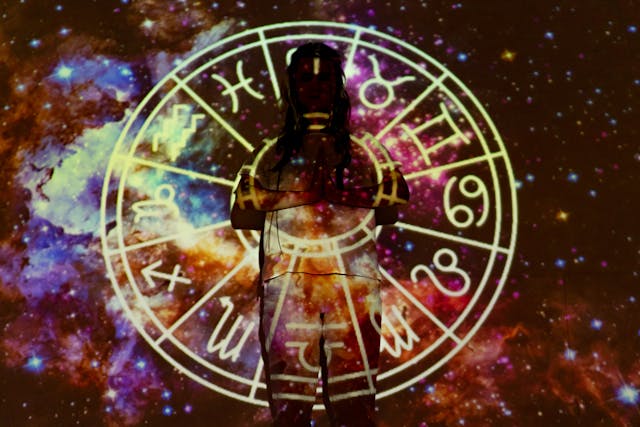
It is divided into twelve zodiac signs, beginning with Aries and continuing through Taurus, Gemini, Cancer, Leo, Virgo, Libra, Scorpio, Sagittarius, Capricorn, Aquarius and Pisces.
Each sign covers a section of the zodiac and has its own element, modality, ruling planet and traditional characteristics. When astrologers say a planet is in a particular sign, they are describing where that planet is positioned within this twelve-part system.
5. The Birth Chart
A birth chart records the astrological sky for a specific time and place of birth.
It shows the positions of the Sun, Moon, planets, zodiac signs, houses and important angles at that moment. Because planetary positions continually change, every chart contains its own combination of placements.
A birth chart gives astrologers far more information than a Sun sign alone. It can be used to examine personality, emotional responses, communication style, relationships, ambitions, strengths and recurring life patterns.
6. The Sun Sign, Moon Sign and Rising Sign
The Sun, Moon and Rising sign are often described as the three most recognisable parts of a birth chart.
The Sun sign represents identity and personal direction. The Moon sign is associated with emotional reactions, habits and inner needs. The Rising sign, or Ascendant, describes the sign appearing on the eastern horizon at the moment of birth and influences how a person approaches life and presents themselves to others.
These three placements do not compete with one another. They describe different layers of the same person and help explain why someone may not completely identify with the usual description of their star sign.
7. The Planets
In astrology, each planet represents a particular function, drive or area of experience.
Mercury relates to communication and thought. Venus represents relationships and values. Mars describes action and motivation. Jupiter is associated with growth and opportunity, while Saturn governs structure, responsibility and limitation.
The outer planets, Uranus, Neptune and Pluto, move more slowly and are connected with broader processes of innovation, ideals and transformation.
Astrologers interpret a planet by examining the sign it occupies, the house where it appears and the aspects it forms with other planets.
8. The Twelve Houses
The twelve houses divide the birth chart into different areas of life.
While zodiac signs describe how planetary energy is expressed, houses describe where that energy is most likely to operate.
The houses cover subjects such as identity, money, communication, home, creativity, work, relationships, shared resources, travel, career, friendships and private life.
A planet's house placement is therefore essential to interpretation. Venus in a relationship house has a different emphasis from Venus in a career or financial house, even when the planet occupies the same zodiac sign.
9. Zodiac Compatibility
Zodiac compatibility examines how different signs and birth charts interact.
Basic compatibility often compares two Sun signs, but a detailed relationship analysis considers much more. The Moon, Venus, Mars, Rising sign, houses and planetary aspects can all influence how two people communicate, express affection, handle disagreements and build trust.
Compatibility does not divide relationships into perfect and impossible matches. It identifies areas of natural understanding, attraction, tension and difference. Challenging combinations can still form strong relationships when both people understand how their needs and responses differ.
10. Birth Chart Interpretation
Reading a birth chart means bringing the individual parts of astrology together.
An astrologer does not interpret a planet, sign or house in isolation. The meaning comes from the combination. A planet describes what is operating, the sign describes how it behaves, and the house shows where it is expressed.
Planetary aspects then reveal how the different parts of the chart cooperate, compete or create tension. Learning to combine these factors is the point where astrology becomes a complete method of interpretation rather than a collection of separate definitions.
How the Ten Concepts Work Together
These ten concepts form the basic structure of astrology.
The zodiac provides the twelve signs. The planets move through those signs and represent different functions. The houses connect those planetary placements with specific areas of life. The birth chart records the complete arrangement for one moment, while horoscope forecasting compares that chart or zodiac sign with later planetary movements.
Compatibility uses the same system to compare two people, and birth chart interpretation brings all the separate factors together into one connected reading.
Once these foundations are understood, more advanced subjects such as planetary aspects, transits, retrograde cycles, eclipses, synastry, progressions and predictive astrology become much easier to follow.
Astrology becomes clearer when its main concepts are understood as parts of one system. These ten topics provide the foundation needed to read horoscopes more thoughtfully, explore a birth chart and understand how astrologers connect planetary movements with signs, houses and areas of life.
 Aries
Aries Taurus
 Gemini
 Cancer
 Leo
Leo Virgo
Virgo Libra
Libra Scorpio
 Sagittarius
 Capricorn
 Aquarius
 Pisces